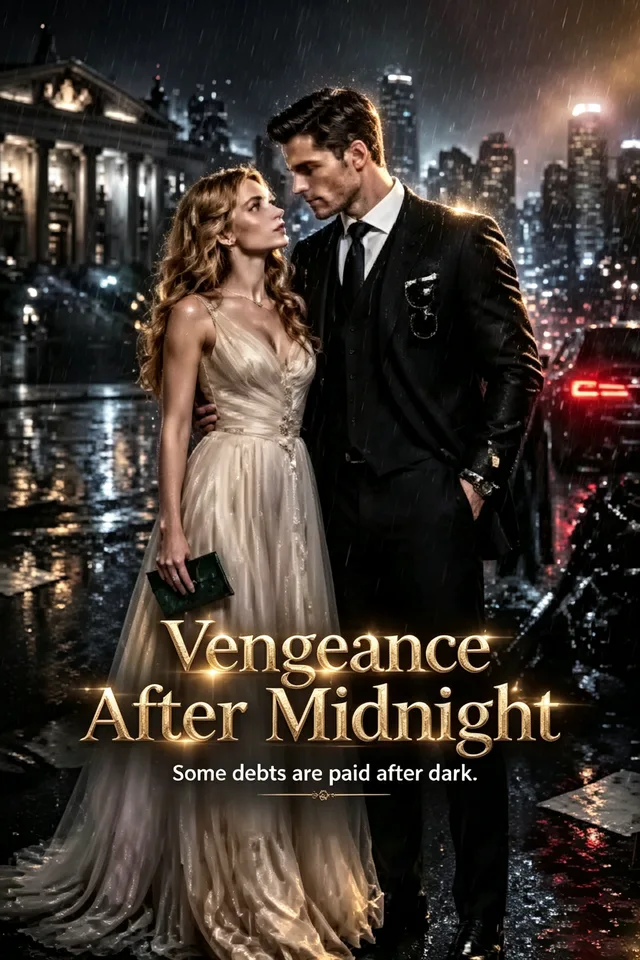
Dumped for a rich heiress, Harper grabs a grimy mechanic off the street and tells him to marry her. She expects a basement life and a long fight against her powerful ex, and spends the early episodes puzzled by how conveniently her bullies start to collapse.
Vengeance After Midnight
Dumped for a rich heiress, she grabs a grimy mechanic off the street and says “Marry me” — expecting a basement, not a husband who quietly owns New York.
The opening arc is a one-line premise played straight. Harper has just been dumped for a rich heiress, and on the street she grabs a grimy mechanic and says, “Marry me.” She expects a life in a basement, fighting her powerful ex with nothing. What she gets is stranger: whenever she is threatened, her bullies mysteriously go bankrupt or face jail time. The show’s central reveal is given in the premise itself — her “poor” husband is Julian Sterling, the ruthless billionaire CEO who owns New York. The early episodes play that gap for both comedy and tension: Harper thinks she married a fellow underdog, and every person who tries to push her around finds out, one by one, that they have chosen the wrong wife.
Vengeance After Midnight is available on YourChannel through its official player.
About the show
Source: YourChannel official drama page & player — editorial coverage based on the opening arc; series details verified 27 Oct 2026.
The premise is a marriage of convenience built on a wrong assumption. Harper has just been dumped for a rich heiress, and on impulse she stops a grimy mechanic on the street and asks him to marry her. She expects the worst: a basement, a tight budget, and a long, uphill fight against an ex who has money and status on his side. The show treats that expectation as the setup, not the reality.
What the opening stretch does is let the wrong assumption run for as long as it can. Every time Harper is threatened, her bullies mysteriously go bankrupt or face jail time. The audience knows what Harper does not: the “poor” husband she married is Julian Sterling, the ruthless billionaire CEO who owns New York. The early episodes lean on that asymmetry — she thinks she is fighting her ex alone, while he is quietly arranging the world around her.
The series runs 35 episodes in English, with the opening stretch playable on the official YourChannel player. That opening stretch covers the public dumping, the street-side proposal, the early marriage, and the first times her bullies are taken down without her quite understanding why. The longer arc — when Harper finds out who her husband actually is, and how that changes the marriage — is left to the show rather than summarised here.
Meet the characters
The grimy mechanic Harper marries on impulse. He is in fact Julian Sterling, the ruthless billionaire CEO who owns New York, and he is quietly arranging for anyone who threatens his new wife to go bankrupt or face jail time.
Standout scenes
Four editorial picks from the opening marriage arc — the dumping, the street proposal, the early takedowns and the secret. No ending spoilers.
Dumped for the Rich Heiress
The show opens on Harper being dumped for a rich heiress, which is the wound that makes the street-side proposal feel like a reflex rather than a romance.
“Marry Me.”
On the street, Harper grabs a grimy mechanic and says, “Marry me.” The opening episodes treat the proposal as a dare, not a plan.
The Basement She Expects
Harper expects a life in a basement, fighting her powerful ex with nothing. The early marriage scenes lean into that expectation — she is braced for the worst.
Bullies Who Go Bankrupt
Whenever Harper is threatened, her bullies mysteriously go bankrupt or face jail time. The opening arc lets the pattern build before she works out why.
Key moments
Frames from the opening arc — swipe to browse.


Editor's take
Our editors' notes on the opening arc — personal picks, not audience feedback.
The show runs on dramatic irony: the audience knows the husband’s real identity almost immediately, and the pleasure is watching Harper slowly notice that her underdog marriage is not what it looks like.
Harper is written as someone who expects to fight alone, which is what makes the quiet takedowns land. Julian’s power is treated as background noise rather than a superpower reveal.
Best for viewers who like hidden-billionaire romance, a heroine who proposes first, and a slow streak of revenge on the ex who dumped her. If you want a slow-burn meet-cute or a serious legal thriller, the early episodes stay light, procedural and grinny. The 35-episode run gives the gap between what Harper thinks and what is actually true time to stretch.